Note To My Critics:

The links to the many sites that I've included contain information that I believe to be relevant, be it the graphics, the videos, the undercover investigations, etc. . Exposing & and ending the brutality and savagery inflicted on the non-human animals is what I am focused on. I strongly believe that every voice against animal abuse/exploitation is of value and -and- collectively we have the power to end it. I am here for the animals, not for anyone's approval and for that I make no apologies. ** I do not promote violence towards humans. ___________________________________________________ Bookmark and Share

Thursday, April 8, 2010

Canadian Horse Slaughter *Graphic*

From: Beth in Illinois Fighting to End Horse Slaughter (www.​myspace.​​com/​66851365)


In late February 2010, the Canadian Horse Defence Coalition (CHDC) received hidden camera footage of horse slaughter practices at Quebecs Viandes Richelieu and Albertas Bouvry Exports - the latter known as North Americas largest exporter of horsemeat.

The CHDC has asked a panel of veterinarians, the BC SPCA and the World Society for the Protection of Animals to review the footage, which contains numerous instances of improper stunning and horses showing signs of returning consciousness.

Early audit results of the footage show automatic failures of both facilities.

As there are only two government-​​​approved methods of stunning horses in Canada - captive bolt gun and rifle - and both methods have been shown to cause prolonged suffering in numerous horses, we conclude that these animals cannot be slaughtered humanely in todays slaughterhouse assembly lines.

The CHDC therefore calls for the immediate closure of Canadas horse slaughter plants.

Albertas Bouvry Exports

Part One


Part Two


Part Three


Richelieu

Part One


Part Two


Part Three


Wednesday, April 22, 2009

VIDEO~ Horse Owners Facing Terrifying Reality


Fox News Article:Horse Owners Facing Terrifying Reality
http://www.q13fox.com/pages/landing/?blockID=270883&feedID=144

Q13 FOX News
April 21, 2009
His nickname is 7, and lucky is exactly what he is - so is Sarah.
"Sarah's a horse we actually pulled off the truck," says Monica Stephens of Natural Horse Savvy in Snohomish. She and Kalisa Jenne-Fraser are grateful for that.

"People don't understand the risk when they send their horses to auction. They don't understand the reality when they get on the truck. There's still a market for horse meat unfortunately," says Jenne-Fraser.

Every year, tens of thousands of horses are sold at auction, then driven to Canada or Mexico, where they're violently slaughtered.

" The U.S. is one of the few countries that doesn't eat (horse) meat, but I don't think it's our responsibility to feed other countries with our pets," says Jenne-Fraser.

But it is happening, especially during these tough economic times.

"We're talking about having to decide between feeding your family or feeding your beloved equine companion. No one should have to face this," says LynnD Stiles of the Phoenix Rising Horse Sanctuary.

She and Stephens say they'd buy every horse at auction if they could

"How do you go there and see these horses with so much potential and I don't have the space to bring 100 horses home," says Stephens.

But the reality is, practically every horse rescue is full right now. There's no room and owners are being forced to make a painful decision, one way or another.

Katie Merwick of the Second Chance Ranch in Elma says, "People are letting their horses starve in a field because they don't want it to go to slaughter. They just watch it starve. "


But Merwick says that solution isn't much better.

"If the choice is slaughter or euthanasia, they should be put down humanely. "

The problem with euthanasia, the final $600 tab is too expensive for those who are already struggling. So now a group in Northern California is setting up free euthanasia centers. Stiles hopes to see something like that pop up here.

"Good for them. They've listened. It's a kind solution, bless their hearts. "

"I always think it's a noble gift you give your horse, when you can give them a humane good-bye." says Jenne-Fraser.

But as long as these horse-rescue owners can help it, they'll continue to welcome these animals onto their ranches and into their hearts.

"They're fabulous just wonderful animals. I look out and think you wouldn't be here," says Stiles.

Horse rescue owners say one of the ways you can keep these horses off of the slaughter trucks, is by fostering or adopting one of these animals. Many of these horses are former racers, competitors, and thoroughbreds.
___________________________________________________________

Tuesday, April 21, 2009

Wild Horse meat processsing plants planned for NW


☆*•¸¸. •*¨'* ƸӜƷ Reposted by:


Wild Horse meat procesising plants planned for NW


Mustang Pictures, Images and Photos
SIGN PETITION HERE;
http://www.thepetitionsite.com/1/south-dakota-sioux-to-slaughter-horses

American Indians PRAY for Horse-Slaughter PlantsTarget:The National Congress of American IndiansSponsored by: Friends of Equines Society FOES of Equine Slaughter
Americans dont eat horses. Polls taken over the years have consistantly shown that most Americans find the thought of eating horseflesh reprehensible. Nevertheless, despite Americas abhorance to the notion of eating horses, America continues to be the worlds largest exporter of horses for human consumption abroad.

Currently, there is a bill in the United States Congress that would
protect our American Horses from slaughter for human consumption.
The bill, HR 503, would also protect them from being exported to other countries for slaughter. HR 503 is a very popular bill, not only with the majority of the American people but with a majority of legislators too.
Our opponents are few but powerful, that is, they have the money to influence the vote in DC., and they do. (It only takes ONE wrongway
vote to kill a bill)

Last summer, The National Congress of American Indians quietly
submitted to our U.S. Congress, "invoking the devine blessing of the
creator upon their efforts,"... a proposal to amend HR 503, our National anti-horse slaughter bill. They are seeking to include an ammendment
that will allow for the building of horse-slaughter plants on Indian lands. You can read the full text of the proposed amendment below;

http://www.ncai.org/ncai/resolutions/doc/DEN-07-100_with_sigs_amended_dc.pdf

Signers we urge you to please contact the National Congress of American Indians to tell them what you think of their idea. Below is a link to their site;

http://ncai.org/

Remind them of the story of "Horse-Slaughter Camp" where, during the 1840's, the U.S. Cavalry captured a band of Palouse Indians along with a large herd of their prized horses. The Indians were horrified when the soldiers began to mercilessly slaughter their entire herd of 800 horses.
To save bullets, the babies were clubbed in the head. Here is an excerpt from a witness to the massacre;

The defeated Indians wondered what nature of mankind could kill horses -- stallions, geldings, mares, and colts -- in such a cold-blooded manner? They never forgot the horse slaughter
http://www.spokaneoutdoors.com/horsesc.htm
"What monsters could do such a thing," they thought.

Surley there must be a better way for our Native American friends and neighbors to make a living.. Do they really have to rely on the blood of
our American Horses to improve their lot? We dont think so and we are shocked to know that even some American Indians do. Are these pro-horse slaughter Indians a minority? We hope so! Let the voices of the anti-horse slaughter Indians be heard.

While cultures and customs vary, all Native American Indian beliefs are rooted in Animism, meaning that they believe(d) the universe was bound together by the spirits within ALL natural life, from plants, animals, humans, water, and even the Earth itself. Thus it would seem that the slaughtering of horses by Indians to satisfy the whitemans greed would go against that religion. In otherwords, its ungodly.

There are other, better ways to generate income. Moreover, The
American Economic Recovery and Reinvestment Act (Stimulus) includes approximately $3 billion that will go toward direct tribal programs,
another $500 million will be available in financing provisions, and a
number of programs include tribes as eligible recipients.

How about we build our National Equine Rescue on their lands or even our National Wild Horse Sanctuary / Park?
Surely something like that would be more in line with Native American religious beliefs.

We are imploring our Native American friends and neighbors, by this petition, to re-think their postion on horse-slaughter, and to come to
their senses and to adhere to their religious beliefs that all life is sacred, and help us to PRESERVE the lives of our American horses instead of assisiting the whiteman in sending them to needless, senseless,
merciless slaughter.

There is an Indian legend which says: "When a human dies there is a bridge they must cross to enter into Heaven. At the head of that bridge waits every animal that human encountered during their lifetime. The animals, based on what they know of this person, decide which humans may cross the bridge...and which are turned away. "

Thank you signers for taking the time, but mostly, thank you for caring about the terrible plight of our American Horses today.

May the Spirit of the Horse Go With You
Warrior Woman.

Note: Pro Slaughter posts will be deleted. This is not a debate forum.


_______________________________________________________________

All tyranny needs to gain a foothold is for people of good conscience to remain silent. ~ Thomas Jefferson

Image and video hosting by TinyPic

"Never doubt that a small group of thoughtful, committed citizens can change the world. Indeed, it's the only thing that ever has." ...Margaret Mead

________________________________________________________________

Sunday, April 19, 2009

THE NURSE MARE FOAL


THE NURSE MARE FOAL:


Drug Protocol Turns Rescued Mares into Nurse Mares
by: Karen Briggs
http://www. thehorse. com/ViewArticle. aspx?ID=13103

Article # 13103

A medication protocol that can induce lactation in "open" mares has changed the way prominent Kentucky Standardbred nursery, Walnut Hall Ltd., manages its nurse mare herd, while giving more than 20 rescued mares a new Walnut Hall's vet, Joe Lyman, DVM, based the technique on presentations by Peter Daels, DVM, PhD, and John Steiner DVM, Dipl. ACT. Using their methods, not only can unbred mares that have previously had at least one foal be persuaded ...


_______________________________________________________________


All tyranny needs to gain a foothold is for people of good conscience to remain silent. ~ Thomas Jefferson

Image and video hosting by TinyPic

Two roads diverged in a wood, and I—
I took the one less traveled by,
And that has made all the difference.
~Robert Frost (1874–1963)

Saturday, April 18, 2009

Woman Walks Across Country Hoping To Bring Awareness to Slaughtering Of Horses

Woman Walks Across Country Hoping To Bring Awareness to Unnecessary Slaughtering Of Horses:

Kristina Kremer wants people to know what happens to sick and unwanted horses in the U.S.

Read The Story

http://www.awalkforhorses.webs.com/


_______________________________________________________________

All tyranny needs to gain a foothold is for people of good conscience to remain silent. ~ Thomas Jefferson

Image and video hosting by TinyPic

Two roads diverged in a wood, and I—
I took the one less traveled by,
And that has made all the difference.
~Robert Frost (1874–1963)

________________________________________________________________

Sunday, March 22, 2009

The clock is ticking to save the American wild horse

Reposted with Thanks to: Linda


http://madeleinepickens.com/%20/run-wild-run-free/

Run Wild, Run Free
Photobucket


Photobucket


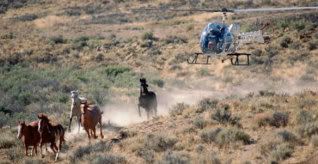
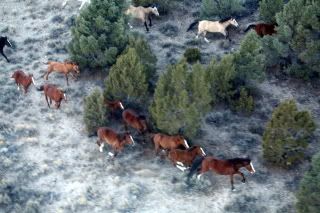
Buzzing helicopters run fatigued and panicked horses into corrals
Sheryl Crow and adopted Mustang, Colorado
Documentary filmmaker James Kleinert
Madeleine Pickens hopes to create a sanctuary for the wild horses currently held by the Bureau of Land Management.


The race to save the American wild horse is-on and the clock is ticking.
Once upon a time, the wild mustang roamed the plains of what is today Texas in such great numbers that maps of the state from the 1700s mark certain areas with the simple line: “Vast Herds of Wild Horses. ”

“The wild horse is . . . our loyal partner, the one in whose hoof sparks this country was born,” states Deanne Stillman, author of Mustang: The Saga of the Wild Horse in the American West, which details how the role of this indigenous species has grown with the nation, from horses as allies of the early Native Americans to horses used to transport soldiers during the Civil War. Stillman adds, “We may be fighting wars around the world, but in the West, we are at war with ourselves. As the wild horse goes, so goes a piece of America. ”

Such is the tragic tale of the American wild horse, whose continued existence is in danger as the United States Bureau of Land Management (BLM) contemplates a plan of mass slaughter of this blazing icon of freedom. Claiming that the horses compete with cattle for grazing space on Western public lands and must be removed—and bowing to the ranching lobby, which has strong ties to Washington—the BLM has rounded up more than 33,000 wild horses in recent years from federally owned land. In what the BLM calls a “gather,” buzzing helicopters run fatigued and panicked horses into corrals. The horses are then taken to holding pens, where they are sold or put up for adoption, and often end up abused, neglected, or in a slaughterhouse, to be sold as food abroad.

This is an ignoble end, opponents say, for a majestic animal that originated in North America more than 55 million years ago, eventually spreading to Asia and Europe via the Bering Land Bridge. In the 16th century, the horse was reintroduced to the continent by the Spanish conquistadors.

“The wild horse is a stunning creature,” says James Kleinert, a Colorado-based documentarian who is part Seneca. “I have ridden to Wounded Knee in the middle of winter,” he says, “and I have experienced the resilience of the wild horse on these rides. It is absolutely amazing.” The animals inspired Kleinert’s 2007 film Saving the American Wild Horse, which features powerful pleas for the mustang’s survival by the likes of singer Sheryl Crow, who lives in Tennessee and owns a mustang, and actor Viggo Mortensen, who was introduced to the plight of the wild horse while filming Hidalgo.

More than two million mustang roamed the West at the end of the 19th century, but now only 25,000 to 30,000 remain. Recognizing their dwindling numbers, Congress passed the Wild Free-Roaming Horses and Burros Act of 1971, which protected them from inhumane roundups on public lands in Western states and prevented their sale for slaughter (however, the act still stated that “excess horses” could be removed). But in 2004, Conrad Burns, then a Republican senator from Montana, spearheaded an amendment that removed all protection for wild horses over the age of 10, and mandated that “unadoptable horses” be sold without limitation, including for slaughter. Between 1971 and 2006, up to 200,000 wild horses and burros were removed by Department of the Interior agencies such as the BLM using the “excess” loophole, and the horses lost 19 million of the acres allocated to them under the 1971 act.

The BLM and pro-slaughter ranchers see the wild horses as a nuisance and an obstacle to cattle grazing. They say that there is an “overpopulation” of wild horses and blame them for overgrazing the land. But these claims are misleading, say horse supporters, citing the fact that domestic cattle outnumber wild horses by a 1:150 ratio. While there are fewer than 30,000 wild horses remaining in 10 states, up to 4.5 million cattle occupy the same lands. What’s more, a study by the General Accounting Office showed that the overgrazing problem was actually caused by poorly managed domestic cattle herds.

Chief among the opponents of the BLM’s policy is Madeleine Pickens, wife of Texas oil tycoon T. Boone Pickens. “These are young mares with their foals in tow going into the slaughterhouses,” she told RL in an interview from her West Coast home. “They are not all old and unwanted horses. ”

Pickens agrees that part of the problem is misinformation. When she first saw videotapes of the roundups, she says, “I was beside myself. I didn’t know this was going on in our country,” she says. “The wild horse is a national treasure!”

Since then, Pickens has stepped in and proposed a plan that might just save the horses. At the very least, her idea has convinced the BLM to grant the penned-up horses—whose fate will be decided this year—a stay of execution. In November, Pickens brought the idea to Capitol Hill, where it was met with a positive response by politicians. She is trying to create a million-acre sanctuary where all the captive mustangs can be released. (Pickens is presently negotiating with owners to buy land in three different Western locales.) “This is a John Wayne ending where the horses can return to the range and everyone will be happy,” says Pickens. “We are just waiting on Washington. ”

Tom Gorey, a spokesman for the BLM, confirmed that the bureau met with Pickens in the first half of January, and added, “I can’t go into any detail, but I can say that we welcome her offer and we are very positive about it. ”

While Pickens is generally optimistic about the prospect of cooperation with the new presidential administration, Kleinert is less upbeat about Barack Obama’s selection of Colorado senator Ken Salazar as Secretary of the Interior. Salazar is a rancher who has supported the BLM’s policy regarding wild horses.

Kleinert is in the process of finishing a feature-length film about the wild horse called Disappointment Valley: A Modern Day Western, which he intends to show at international film festivals later this year. While the first film was a “call to action,” he says, this one delves deeper into the issues and offers up possible solutions.

“We’ve got to pass new legislation as soon as possible to restore the protection these horses had under the 1971 act, and the BLM needs to implement management-in-the-wild policies,” says Kleinert. Of Pickens’s plan, he says, “I think this is a noble step on behalf of Mrs. Pickens. On the other hand, we cannot let the BLM off the hook.” Virginie Parant, an attorney and Director of the American Wild Horse Preservation Campaign, concurs: “We are grateful to Madeleine Pickens and her efforts. Her plan is a positive development, but it cannot be used by the BLM to privatize wild horses. Those horses belong on our public lands. ”

If you would like to help save the American wild horse, write to your senator or congressman about the issue and ask that they vote in favor of Madeline Pickens’s plan and vote to restore the Wild Free-Roaming Horses and Burros Act of 1971. For more information on the American Wild Horse Preservation Campaign or for additional information on how to help, visit www.wildhorsepreservation.com.

Friday, March 13, 2009

MT: Tell Senate to Keep Horse Slaughterhouses Out of Your State!

MT: Tell Senate to Keep Horse Slaughterhouses Out of Your State!

MT HB 418—Allows Horse Slaughter for Human Consumption
Sponsor(s): Rep. Ed Butcher
ASPCA Position: Oppose
Action Needed: Please call the Montana Senate Agriculture, Livestock, and Irrigation Committee today and urge its members to oppose HB 418.

Update, 3/11/09: Unfortunately, HB 418 passed the Montana House and moved to the Senate, where it is currently being considered by the Agriculture, Livestock, and Irrigation Committee.

Introduced by State Rep. Ed Butcher, Montana House Bill 418 would allow investor-owned horse slaughter plants to operate in Montana and prohibit courts from granting injunctions to stop or delay the construction of a horse slaughter plant. It is strongly opposed by the ASPCA.

Please understand that horse slaughter is NOT euthanasia—it is the processing of horses into meat for human consumption. Proponents of this bill claim that the slaughter of unwanted horses is more humane than euthanasia, but nothing could be further from the truth. Until our country’s final three horse slaughter plants were closed two years ago, horses were often injured even before arrival due to overcrowded conditions during transport. Some were shipped for more than 24 hours at a time without food, water or rest. The methods used to slaughter these horses rarely resulted in a quick death. The horses often endured repeated stuns or blows, and sometimes remained conscious during their slaughter.

Americans do not eat horse meat—this bill benefits only the interests of specialty markets overseas. Horse slaughter plants are not clean/green enterprises, and have proved economically draining and environmentally damaging in other states. After hard-fought battles, Texas and Illinois were finally able to close down the U.S.’s last horse slaughterhouses in 2007. We should learn from those states and not bring an economic and environmental burden to Montana.

What You Can Do
Call the Montana Senate Agriculture, Livestock, and Irrigation Committee immediately to urge opposition to House Bill 418.

You can leave a message for the Montana Senate Agriculture, Livestock, and Irrigation Committee by calling (406) 444-4800.

When you call, you will speak to a staff member who will take your name and your message. All you have to say is that you would like the Senate Agriculture Committee to oppose House Bill 418, legislation that will allow horse slaughter plants to operate in Montana. Be sure to thank the person you speak with for taking the time to register your opinion.

Please also encourage your spouse and all your friends and family living in Montana to make this important phone call and help defeat HB 418.

Use the link below to let us know you called—we really appreciate it! Thank you for your help, Montana.

*Please note, only Montana residents should call Montana state legislators.

This is done

Make a call to Montana Senate Agriculture, Livestock, and Irrigation Committee Committee Staff's Office


Phone: (406) 444-4800


Free Veg Starter Kit TeachKind.org Chained Dogs

blogger templates | Make Money Online